In Memoriam
Walt Whitman Odets
February 4, 1947 — July 5, 2026
He lived several full lives at once — a photographer of the American landscape in black and white, a working pilot, one of the first and most revered voices of the watch world, and a clinical psychologist whose writing changed how a generation understood shame, survival, and what it means to live a life that is truly your own. He was orphaned at sixteen, lost a partner to AIDS, and fashioned from those losses — quietly, and with evident tenderness — an unapologetic life.
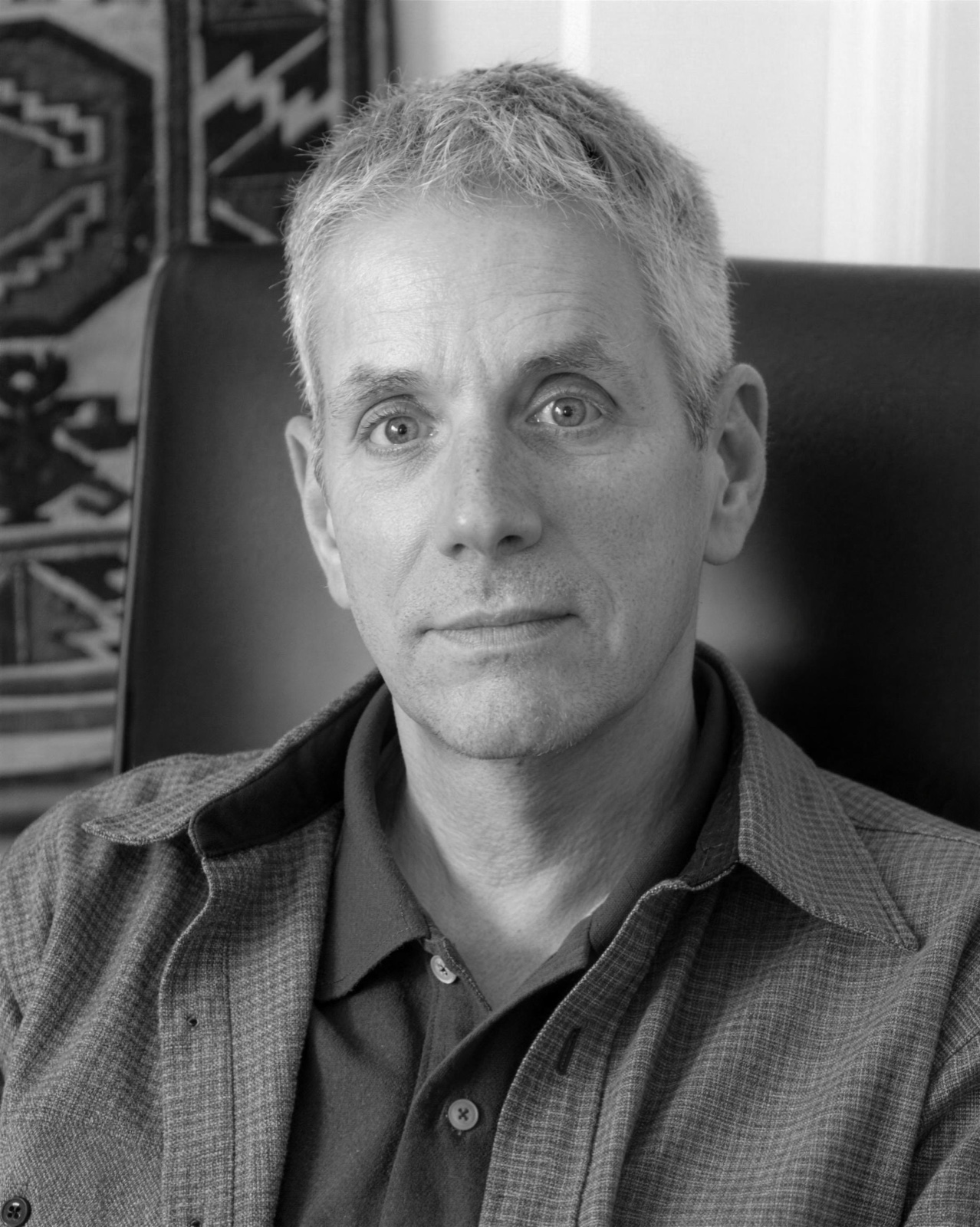
Los Angeles & New York · 1947–1969
The son who inherited a name and a standard
Walt was named by his father — the playwright Clifford Odets — for Walt Whitman, America's greatest poet. His mother was the stage actress Bette Grayson. He was born into one of the great, difficult stories of the American theater, and he was orphaned young: his parents separated when he was two, his mother died when he was seven, and his father died of cancer in 1963, when Walt was sixteen. Both parents gone before he was grown.
After his father's death he went to New York, where he spent part of his adolescence with his legal guardians, Lee and Paula Strasberg — Lee, the legendary teacher of Method acting, had been Clifford's close friend in the Group Theatre. Walt never forgot what it was to be without a home of his own making, and the lesson seems to have taught him something — a way of feeling, quickly and exactly, what another person was carrying.
At twenty-one, Walt took over as literary executor of his father's estate, later giving the Clifford Odets papers to the New York Public Library. The instruction he carried from his father he repeated all his life: the only important thing is to never do anything for money. He obeyed it in every field he entered, none of which he entered to get rich.
America, in black and white · 1965–2009
The photographer
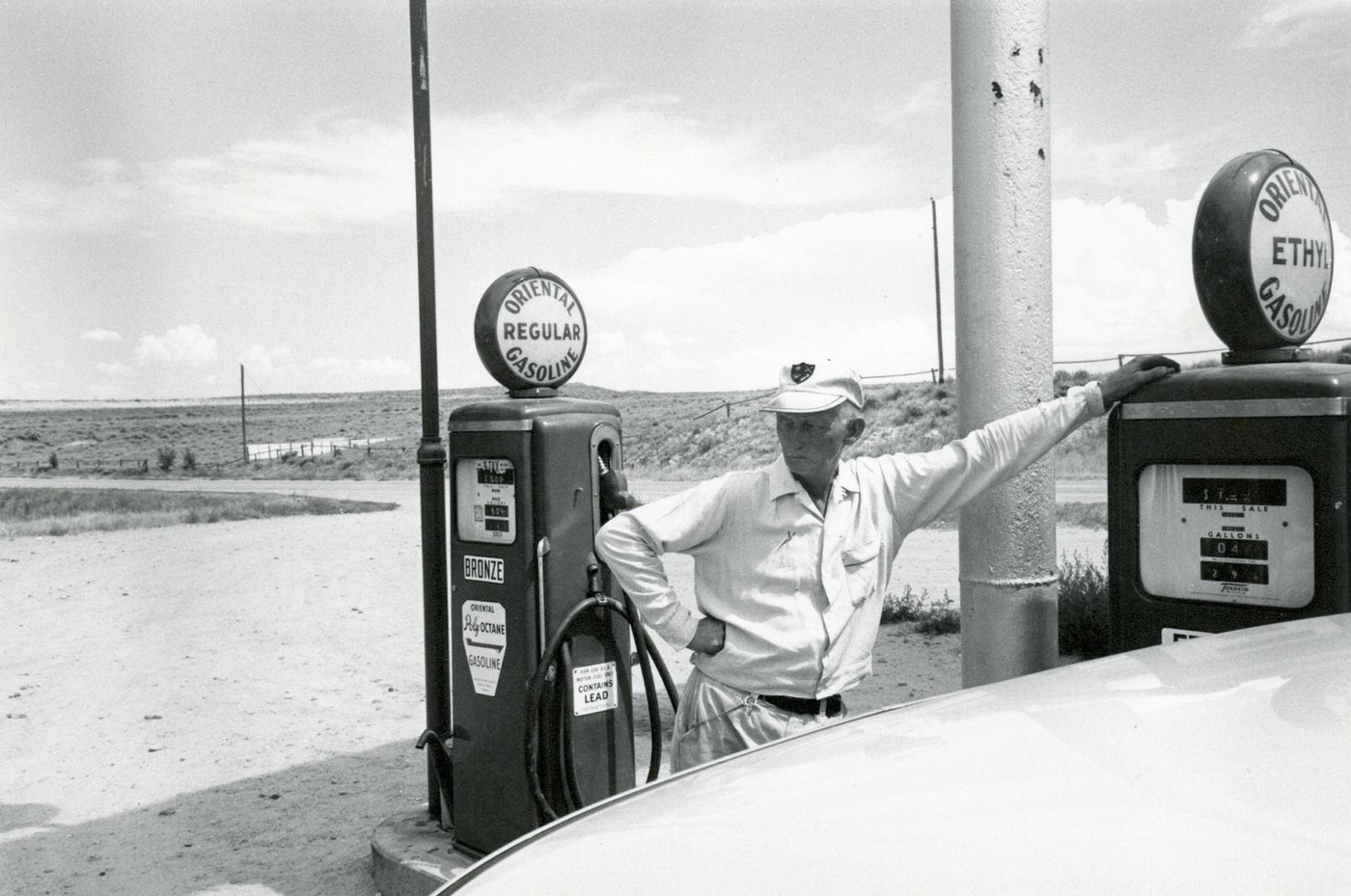
He worked only in black and white, for more than forty years — the American social landscape, gas stations and back streets, ordinary people doing little or nothing in ordinary places. He gave weight and dignity to the people the rest of us walk past. His prints entered the Library of Congress, the Oakland Museum, the Brooklyn Museum, the New Orleans Museum of Art, Yale, and Stanford, and in 2007 he received the James D. Phelan Award in Photography.
He thought hard about what a photograph is, and wrote about it beautifully: that its literalness was its greatest strength, and that a landscape divided by a single tree was joined again only as an idea — a metaphor, he said, for the fundamental isolation of human experience.
San Francisco & the sky · 1969–1985
The photojournalist & the aviator
Before psychology, there were two decades in the air and on assignment. He joined a San Francisco photojournalists' cooperative at the end of the 1960s and shot for Rolling Stone, The New York Times, and others. And he flew — by his own account, a pilot carrying printing plates, bags of canceled checks, and, now and then, a passenger who was no longer living.
He belonged to a small circle of gay pilots in San Francisco who met on Sundays for brunch — and he noticed, quietly, that many of the older ones were HIV-positive, in years when that was unsayable. He carried what he read gently. It was the beginning of his real work.
That he devised a mirror-like reflective fabric to fit inside the cockpit of his Cessna — throwing the sun off the instrument panel to cut the glare — and that Sally Dodge helped sew the very first one. A small, ingenious thing, made by hand.
"The Horologium" · the early internet
The horologist
He was one of the founding, revered voices of the early internet watch world — "the original watch blogger." His essays, written under the title The Horologium, are still read and cited today. A self-taught watchmaker with an almost savant's feel for the most complicated movements, he wrote with wit, exacting standards, and a famous disregard for anything that traded substance for flash.
Jean-Claude Biver is said to have asked, of one of Walt's technical pieces: "He is the only person who understood our movement. The only person. Who is this man?"
Berkeley, California · 1987–2019
The psychologist & author
His defining work came from listening. As a young clinician in the San Francisco of the mid-1980s, he saw men — many of them not infected — in genuine anguish, and he gave the feeling a name: the "worried well." It was, in the climate of the time, almost a taboo act. His insistence that prevention had to begin with what people actually felt was unwelcome; by 1996 some AIDS organizations would no longer work with him. He kept going anyway, because the men who were hurting mattered more to him than the discomfort of naming their hurt.
His first book, In the Shadow of the Epidemic: Being HIV-Negative in the Age of AIDS (1995), was written for men no one else was speaking for. David L. Kirp, reviewing it in the New York Times, placed it alongside the work of Robert Coles and Robert Jay Lifton — company that defines the highest tradition of compassionate, rigorous witness.
Those were also years of personal loss. His partner, Robb Caramico, died of AIDS in 1992. Walt absorbed it the way he absorbed everything hard in his life — by continuing, and by turning it toward care for others.
Thirty years of practice went into his second book, Out of the Shadows: Reimagining Gay Men's Lives (2019), a finalist for the National Book Critics Circle Award, which he called his swan song. Benoit Denizet-Lewis reviewed it in the New York Times:
"There's sadness in Odets's life story, but there's mostly resilience, tenderness and a willingness to fashion an unapologetic gay life, sometimes against all odds."Benoit Denizet-Lewis · The New York Times, 2019
The book's argument was simple and hard-won: that acceptance and progress do not by themselves dissolve shame, and that a good life is built on authentic self-acceptance. He is survived by his companion, Armen Davoudian.
In his own words
"In the end, authentic self-acceptance — or the lack of it — is almost the entirety of what defines a life."Out of the Shadows, 2019
"The visual divisions are literal, but also a metaphor for the fundamental isolation of human experience."on his photography
"When I watch my father's work I can hear his voice. It's like visiting him."on Clifford Odets
Share a memory
Tell us how you knew him
If Walt touched your life — as family, friend, patient, reader, pilot, or fellow traveler — we would be grateful for whatever you'd like to leave here: a memory, a story, a photograph. Your words help us keep him close.
The wall is quiet for now. The first memories will appear here once they've been welcomed in.