A Life · 1947–2026

The compassionate life of Walt Odets

Seen from a distance, his life looks like five lives — photographer, pilot, watchmaker's writer, psychologist, author. Seen closely, it is one. In each of them the same man is doing the same thing: paying attention to another person, patiently and without judgment, until he understands. This is the story of that attention, and of the people who felt it.


Prologue

The quality of his attention

Ask the people who loved him to describe Walt, and the accomplishments come second. First comes the way he listened. He gave you the whole of his attention, as though nothing in the room were more interesting than what you were trying, and failing, to say — and he waited, without hurry, until you had said it. He was not in the business of fixing people. He was in the business of understanding them, which is rarer, and which most people go their whole lives without receiving even once.

That is the thread. It runs through the tenderness of his photographs, through the patience of a man who would spend an afternoon inside a watch, and through the thirty-five years he sat with men in the loneliest hours of their lives. He lost his mother at seven and his father at sixteen, and somehow turned that early acquaintance with grief not into armor but into an instrument — a way of feeling, quickly and exactly, what another person was feeling.

These pages follow that thread as far as the record allows. They will not reach the end of it, because the last stretch lives only in you.

The heart of this book

What is the one thing about Walt you never want to forget? A moment he made you feel understood, a kindness at exactly the right time, something he said that has stayed with you for years. Those specific memories are what will make this his. Please leave them on the Share a Memory page.
Chapter One

The name and the house

Los Angeles & New York · 1947–1954

He was born in Los Angeles on February 4, 1947, and his father named him for a poet — Walt Whitman, who wrote "I am large, I contain multitudes." It was an inheritance the boy would grow into.

He learned early what loss feels like from the inside. His parents separated when he was two; his mother, the actress Bette Grayson, died when he was seven, at about thirty-two. His father, Clifford, died of cancer in 1963, when Walt was sixteen — both parents gone before he was grown. An older sister, Nora, was born with a mental disability; their parents chose not to institutionalize her, and she grew up with the family — a decision Walt honored and spoke of with care all his life. "I had a lot of empathy," he said of those years — the instinct to feel with people, not merely for them, was there from the start. His childhood might have made him hard. Instead it seems to have made him permeable.


Chapter Two

The father

Clifford Odets · 1906–1963

His father was Clifford Odets, who wrote Waiting for Lefty in about three days in 1935 and woke up famous — the great young playwright of the Group Theatre, later the poisoned wit behind Sweet Smell of Success. It was a large life with a deep wound in it: called before HUAC in 1952, Clifford testified and named names, and it grieved him until he died of cancer in 1963, when Walt was sixteen.

What tells you who Walt was is how he chose to hold that history. Years later, he sat down and read the actual transcripts of his father's testimony, and came away, he said, "enormously relieved" — his father had named only people already named by others. He extended to his father the same thing he would later extend to his patients: the effort to understand a person before judging him. And of what his father left him, he was tender to the end.

"When I watch my father's work I can hear his voice. It's like visiting him."

Chapter Three

Raised by the Strasbergs

Guardianship · 1954–1968

Orphaned young, Walt spent part of his late adolescence in New York with his legal guardians, Lee and Paula Strasberg — Lee, the famous pioneer of Method acting, had been Clifford's friend in the Group Theatre. At twenty-one Walt took over as literary executor of his father's estate and tended it for the rest of his life, giving the Clifford Odets papers to the New York Public Library.

From his father he kept one instruction, and repeated it often: the only important thing is to never do anything for money. It was, at bottom, a rule about doing things for the sake of the people and the work — and he obeyed it in every field he entered, none of which he entered to get rich.


Chapter Four

Wesleyan, and a gift for keeping people

Middletown, Connecticut · c. 1965–1969

He read philosophy at Wesleyan, took his degree in 1969, showed his photographs at the Davison Art Center as early as 1966, and was teaching black-and-white photography there by 1968 — a student teaching his own university. But the thing that lasted from those years was the friendships. Walt kept people. The bonds he formed as a young man he held for fifty years.

Among those friends were Sally Dodge and the circle whose families stayed close to him across the decades and the distance. That steadiness — the refusal to let a friendship lapse simply because life moved — is the reason these pages exist at all.

He was married to Paula Harrington, a Bay Area journalist, from 1983 to 1986. Nora, his sister, died in 2008.

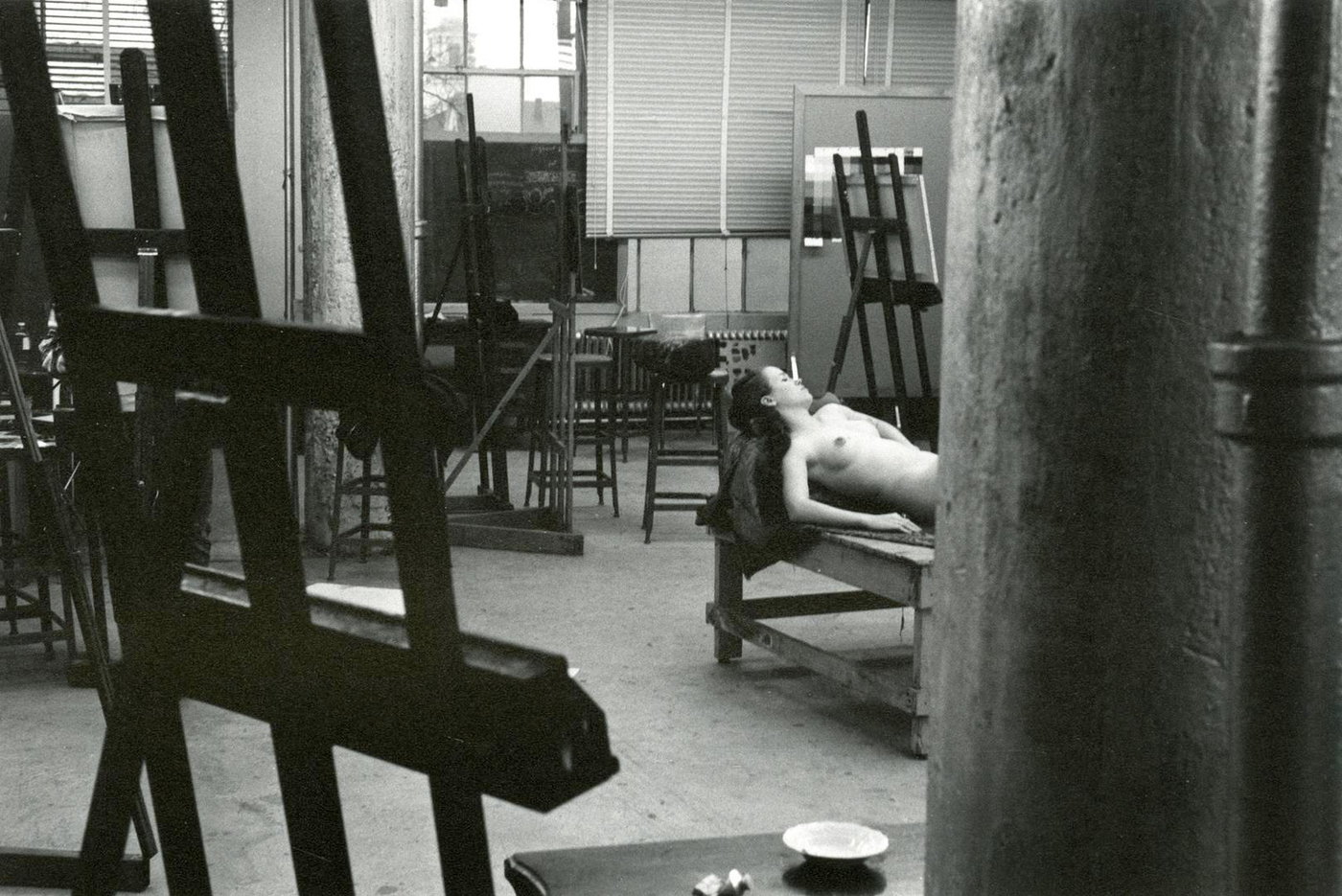
Middletown, Connecticut, 1969 — a gelatin silver photograph by Walt Odets
Middletown, Connecticut 1969 · gelatin silver print

Chapter Five

Two decades aloft

San Francisco & the sky · 1969–1985

Before the consulting room there were twenty years on assignment and in the air. He shot for Rolling Stone and The New York Times, and photographed the American commune movement in a set now kept at the Library of Congress. And he flew — a contract pilot who, in his own dry telling, carried printing plates, bags of canceled checks, and, now and then, a passenger who was no longer living, "also in a bag."

Even here you can see the man he would become, in what he noticed. He belonged to a small circle of gay pilots in San Francisco who met for Sunday brunch, and he observed — quietly, and without saying it to anyone at the table — that many of the older ones were HIV-positive, in years when that was unsayable. He had a gift for reading the hidden weather of a room, and for carrying what he read gently. It was the beginning of his real work.

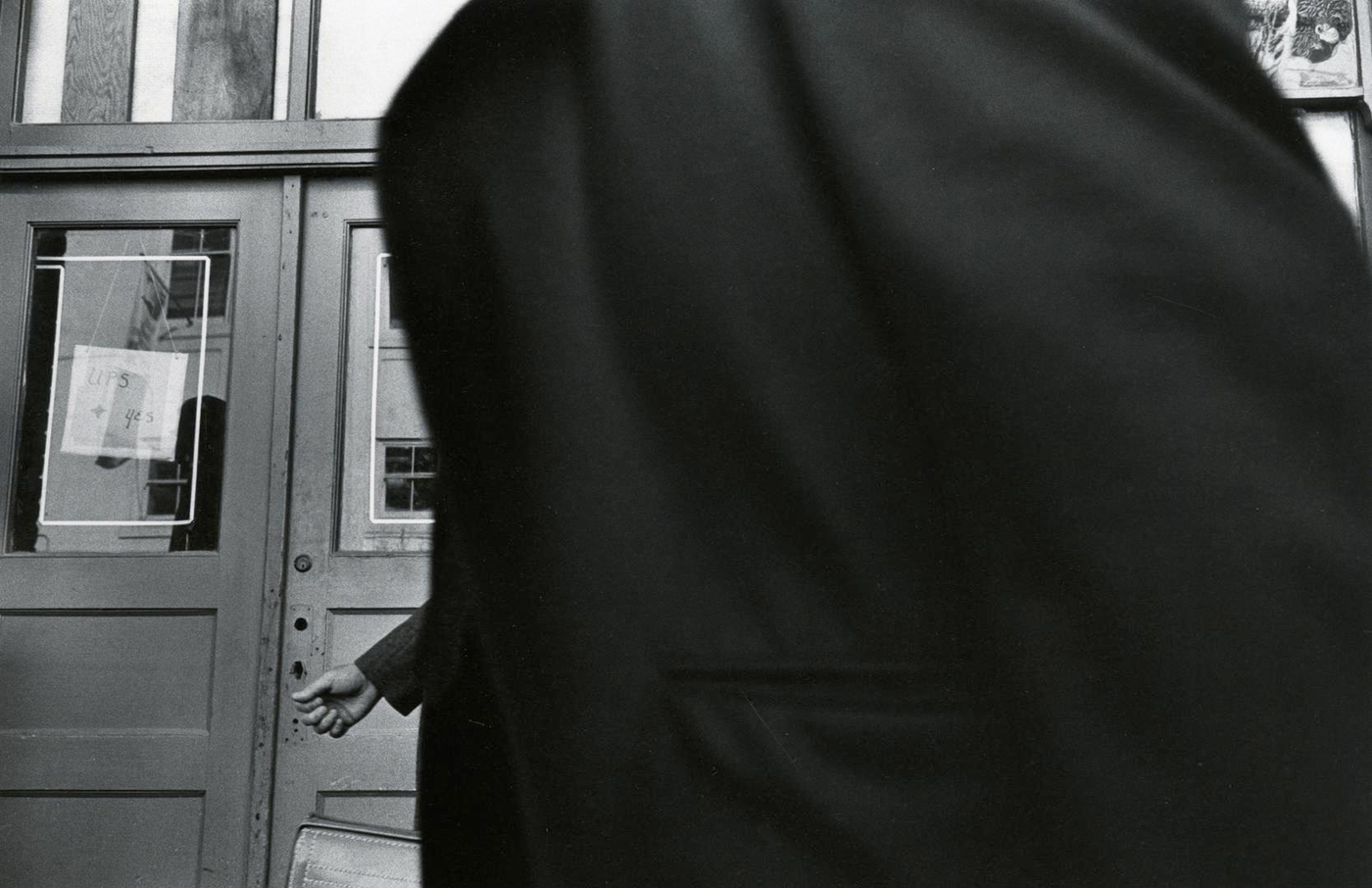
San Francisco, 1969 — a gelatin silver photograph by Walt Odets
San Francisco 1969 · gelatin silver print

Chapter Six

The Cessna invention

A thing made by hand

This chapter belongs to memory, and to the family. The story handed down is that Walt — pilot, tinkerer, a man who could not leave a good problem alone — devised a mirror-like reflective fabric for the cockpit of his Cessna, to throw the sun off the instrument panel and cut the glare. And that Sally Dodge helped sew the very first one, by hand.

We have found no patent for it, no product record — it may simply have been the kind of ingenious, hand-made, word-of-mouth thing that leaves no paper trail. Which means the truest source is the people who were there.

This page is waiting on Sally

What was it called? What did the fabric look like — was it a mirrored, Mylar-like cloth? Roughly what years? A photograph of the cockpit or the plane, an order form, a tail number — anything at all will be woven in here.


Chapter Seven

The photographer

America, in black and white · 1965–2009

For forty years he photographed, only ever in black and white, and always in the same format: a small five-by-eight-inch image floating on a wide eleven-by-fourteen sheet. His subjects were gas stations, back streets, storefronts, people doing very little in ordinary places. What sets the pictures apart is how he looked — plainly, patiently, and entirely without cruelty. He gave weight and dignity to the people the rest of us walk past. The camera did what he did everywhere else: it took the overlooked seriously.

His prints are held at the Library of Congress, the Oakland Museum, the Brooklyn Museum, the New Orleans Museum of Art, Yale, and the Cantor Arts Center at Stanford University, and in 2007 he won the James D. Phelan Award in Photography — an exhibition ran October 23 through November 17, 2007. He also taught photography at the San Francisco Art Institute, as he had earlier at Wesleyan. He wrote about the work as thoughtfully as anyone, and it kept returning to one subject — how separate we are, and how we reach across it anyway.

He published six volumes of photographs across four decades: Reconnaissance (1971), Other Evidence (1979), Illogical Possibilities (1983), and a three-volume slipcase set — Things People Have, Fifty Seven American People, and Dividing Space — in 2010, the last substantial gathering of a life's looking.

"The visual divisions are literal, but also serve as a metaphor for the fundamental isolation of human experience."
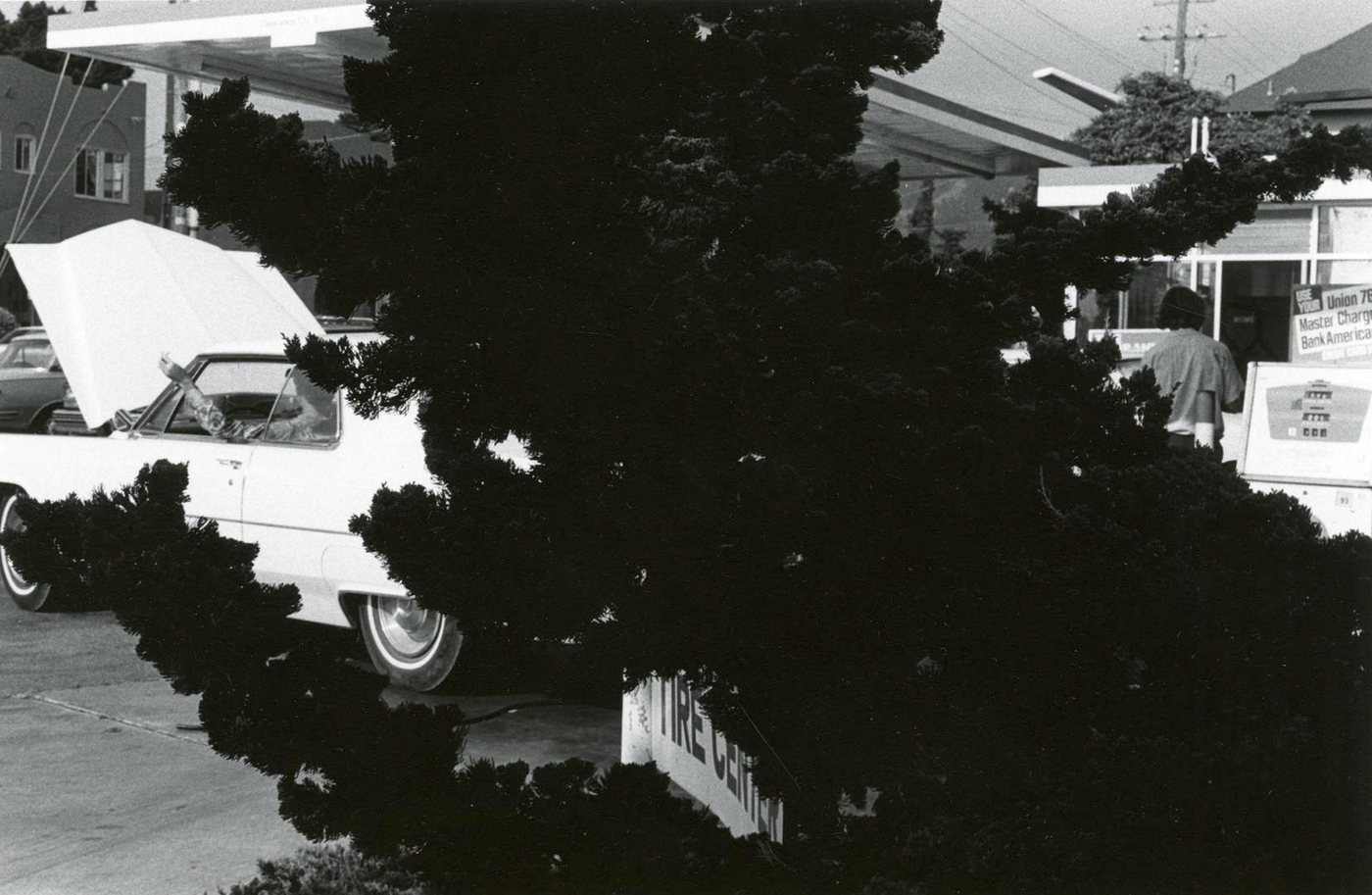
Berkeley, California, 1980 — a gelatin silver photograph by Walt Odets
Berkeley, California 1980 · gelatin silver print

See the gallery of his photographs →


Chapter Eight

The horologist

"The Horologium" · the early internet

In the late 1990s he became one of the earliest and most influential watch reviewers on the internet — the New York Times would later call him one of the founding voices of online watch writing. He disassembled timepieces, examined their mechanics with a microscope, and wrote knowing assessments for TimeZone, the website for watch collectors and horology enthusiasts. His essays, gathered under the title The Horologium, are still read a quarter of a century later by people who never knew his other lives.

It looks, at first, like a hobby set apart from the rest of him. It was not. The same patience that let him sit for hours with another person's pain let him sit for hours over a mechanism the size of a coin, following how each tiny part depended on every other. He loved things made with care, and honored them with care in return. The story his readers still tell is of Jean-Claude Biver — who revived Blancpain and built Hublot — reading one of Walt's pieces on a famously difficult movement and asking, in disbelief:

"He is the only person who understood our movement. The only person. Who is this man?"

Chapter Nine

The listener

Berkeley, California · 1987–2010s

In Berkeley, from 1987, his attention became his profession. He earned his PhD in clinical psychology in 1989 and spent more than thirty years in private practice, mostly with gay men. To sit with him, patients said, was to be taken completely seriously.

His great contribution came from noticing what others had missed. In the worst years of the AIDS epidemic, he saw men who were not infected and yet coming apart — grieving, guilty, frightened — and he insisted that their suffering was real and was being ignored. He called them the "worried well," and he refused to let the field pretend they did not exist. His first book, In the Shadow of the Epidemic (1995), was written for men no one else was speaking for.

It cost him something to say it. His argument — that prevention was failing because it ignored what men actually felt — was unwelcome, and by 1996 some AIDS organizations would no longer work with him. He kept going anyway, consulting instead with New York's GMHC and the Shanti Project and presenting to the CDC, because the men who were hurting mattered more to him than the discomfort of naming their hurt. Time proved him right. His kind of compassion was never softness; it was a form of nerve.


Chapter Ten

Out of the shadows

His swan song · 2019

He waited almost twenty years to write his second book, and said plainly why: he "balked at the specter of having to actually sit down and write about things that would make me cry." It is a small, telling admission — a man so willing to feel that the writing itself hurt. When it came, Out of the Shadows: Reimagining Gay Men's Lives (2019) gathered thirty-five years of listening into one gentle argument: that the shame we acquire early is not undone by pride or progress, and that a life finally rests on being able to accept oneself.

The book ends with an affecting account of the lifelong bonds Walt forged with a gay college classmate and the man's live-in lover — a bicoastal friendship that stretched across decades and, at times, expanded into something more. Among those who shared his life was Robb Caramico, a partner who died of AIDS in 1992.

It was a finalist for the National Book Critics Circle Award in nonfiction, alongside Manual for Survival, The Buried, Say Nothing, and No Visible Bruises. Benoit Denizet-Lewis reviewed it in the New York Times:

"There's sadness in Odets's life story, but there's mostly resilience, tenderness and a willingness to fashion an unapologetic gay life, sometimes against all odds."

He had also explained his subject to Publishers Weekly with characteristic plainness:

"I have emotional feelings for men that I'm cautious about with women. That's really the crux of the whole book — that being gay is a whole internal life and a sensibility, and it's much broader and much richer than the conventional male identity that's so heavily promoted."

He called it his swan song, and its central line is as good a summary of his life's belief as any: He called it his swan song, and its central line is as good a summary of his life's belief as any:

"In the end, authentic self-acceptance — or the lack of it — is almost the entirety of what defines a life."

He wrote with the same gentleness about connection — that even men who claimed to want only "sport sex" were, he believed, still trying to be known; that sex was "a physical metaphor for feelings." He had learned, over a lifetime of listening, that people almost always want more tenderness than they will admit to, and he spent his career giving them permission to want it.


Chapter Eleven

What cannot be filled

Berkeley, California · July 5, 2026

Walt Whitman Odets died on July 5, 2026, at his home in Berkeley, California, at seventy-nine, from complications of Alzheimer's disease. He had received a dementia diagnosis in September 2025; Alzheimer's was confirmed in January 2026. His companion, Armen Davoudian, confirmed the death.

He leaves photographs that look at America without cruelty; watch essays still read by people who never knew his other lives; two books that helped a community and a profession understand shame, survival, and love. But those who knew him will tell you the real inheritance is plainer and harder to hold: the memory of being truly listened to — of being met, in a hard moment, by someone who wanted nothing except to understand you. That is not a thing that can be replaced. He leaves, as every irreplaceable person does, a hole shaped exactly like himself.

This history is not finished, and it is not meant to be. Its last and best pages are the ones only you can write — a memory of his kindness, a photograph, a correction, a story we have gotten slightly wrong. Add what you have, and help us make the record of his life as warm, and as true, as the life itself.

What did his attention feel like to you?

The moment he made you feel understood. The kindness that arrived at exactly the right time. The sentence you never forgot. Please leave it on the Share a Memory page — these are the pages that will make this book his.